Section 6.3
To determine if a defective air compressor is causing excessive oil consumption, perform the following:
Perform a crankcase pressure test and record the test results. refer to appropriate service manual, preventive maintenance chapter. For crankcase pressure guidelines refer to Service Information Letter 02 TS-20 found on the DDC extranet.
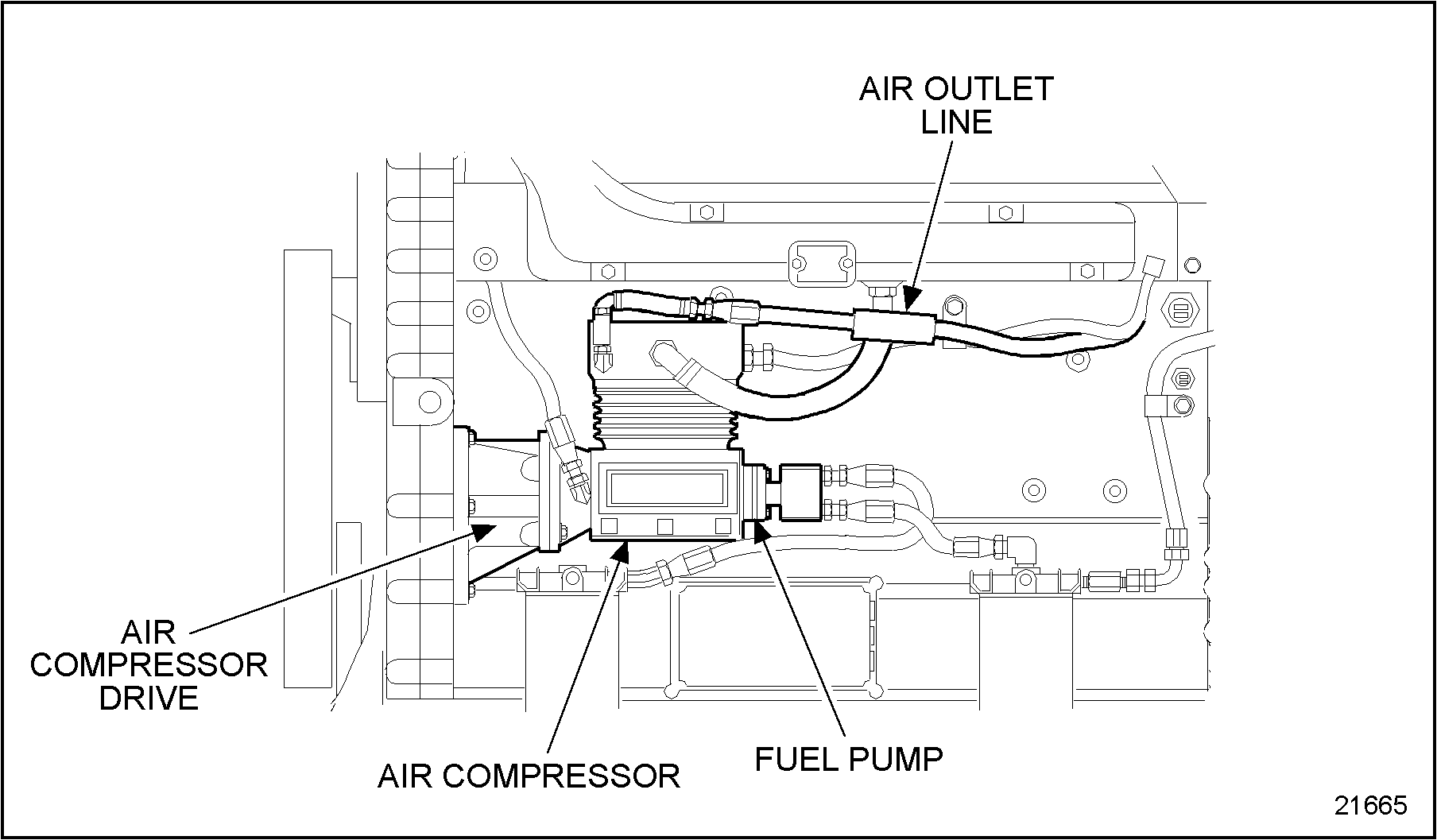
Disconnect the air outlet line from the air compressor; see Figure
"Air Compressor Air Outlet Line"
; refer to appropriate service manual, special equipment chapter.
Figure 1. Air Compressor Air Outlet Line
Repeat step 1
and record the test results.
Compare the results of test one with test two.
If the engine crankcase pressure remained the same, check the turbocharger; refer to "6.4 Defective Turbocharger"
.
If the engine crankcase pressure decreased, replace the air compressor; refer to "6.3.1 Air Compressor Removal"
.
Section 6.3.1
Perform the following steps to remove the defective air compressor:
Remove the air compressor from the engine; refer to appropriate service manual, special equipment chapter.
Disassemble and repair the air compressor; refer to OEM guidelines.
Install the repaired air compressor to the engine; refer to appropriate service manual, special equipment chapter.
Verify repair of the air compressor; refer to "6.3.1.1 Test Engine with Repaired Air Compressor"
.
Section 6.3.1.1
Perform the following steps to determine if the repaired air compressor resolved the excessive crankcase pressure:
Start and run the engine.
Perform a crankcase pressure test. Refer to appropriate service manual, preventive maintenance chapter.
If the engine crankcase pressure exceeds 1.25 kPa (5 in. H2
O), refer to "6.4 Defective Turbocharger"
. Shut down the engine.
If the engine crankcase pressure is less than1.25 kPa (5 in. H2
O), shut down the engine; no further troubleshooting is required.