If resistance is less than 0.5 Ω in all wires, go to step 2
.
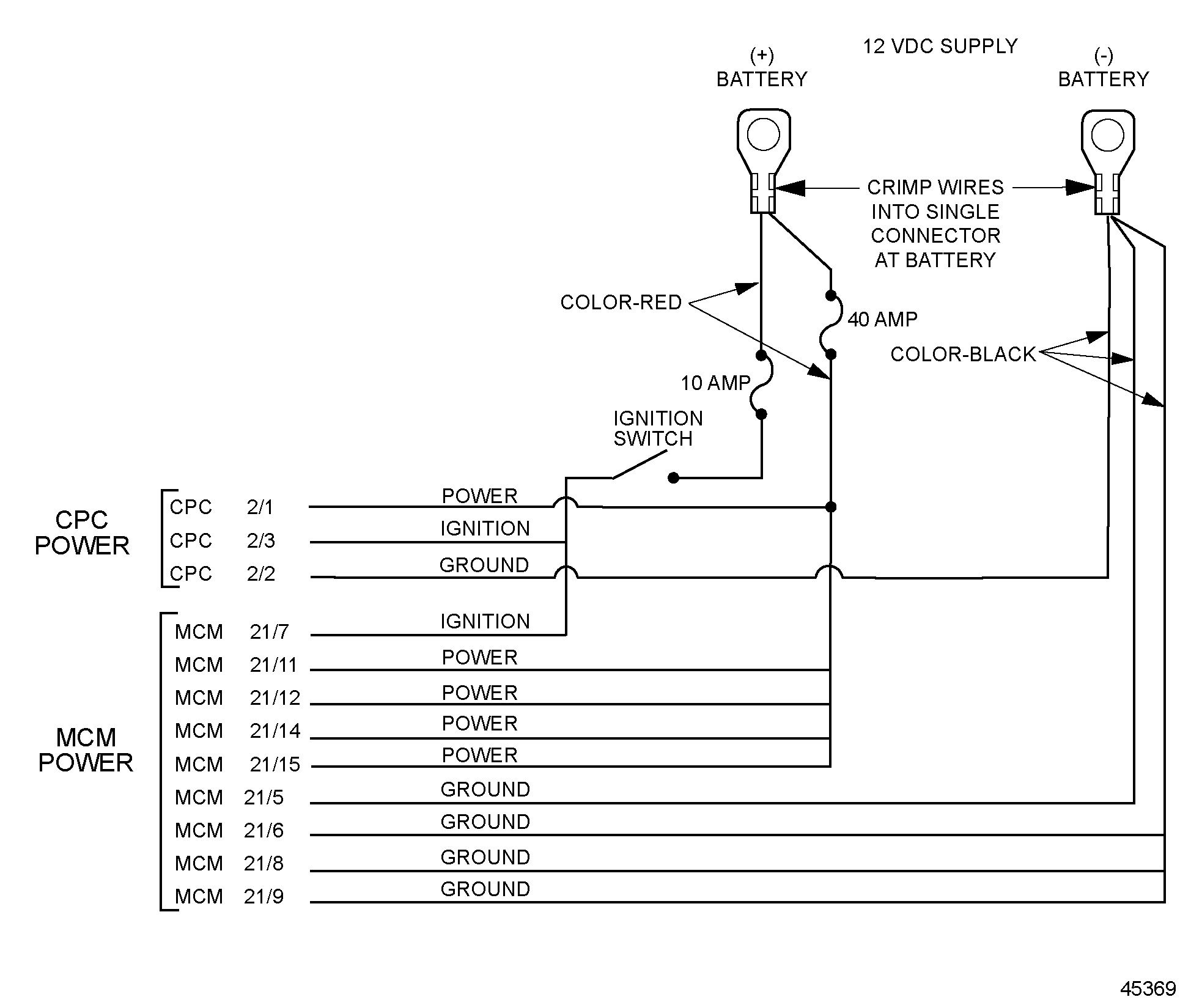
Figure 1. Power Wiring
Measure the resistance of the individual wires in the power circuit (MCM 21/11, 21/12, 21/14, 21/15 and CPC 2/1) with the engine running and battery voltage greater than 12.5 V. See Figure
"Power Wiring"
.
If resistance is greater than 0.5 Ω in any wire, repair or replace the power circuit wires and connector. Refer to "32.2.2.1 Verify Repairs"
.
If resistance is less than 0.5 Ω in any wire, go to step 3
.
Measure the current drop of the individual wires in the ground circuit (MCM 21/5, 21/6, 21/8, 21/9 and CPC 2/2). See Figure
"Power Wiring"
.
If the current drop is more than 0.2 volts in any wire, repair or replace the ground circuit wires and connector. Refer to "32.2.2.1 Verify Repairs"
.
If the current drop is less than 0.2 volts in any wire, go to step 4
.
Measure the current drop of the individual wires in the power circuit (MCM 21/11, 21/12, 21/14, 21/15 and CPC 2/1).See Figure
"Power Wiring"
If the current drop is more than 0.2 volts in any wire, repair or replace the power circuit wires and connector. Refer to "32.2.2.1 Verify Repairs"
.
Reconnect any electrical connections that were disconnected to perform the diagnosis.
Clear codes with DDDL 7.0 or latest version.
Start and bring engine up to operating temperature (over 140°F/60°C).
Verify operation is satisfactory and no warning lamps illuminate. If warning lamps illuminate, troubleshoot the codes. If assistance is required, call the Detroit Diesel Customer Support Center at 313–592–5800.
EPA07 Series 60 DDEC VI Troubleshooting Guide - 6SE567